How to Choose a Spouse in Islam: A Step-by-Step Guide
How to Choose a Spouse in Islam: The Short Answer
In Islam, you choose a spouse first for their religion (deen) and good character (akhlaq), as the Prophet ﷺ advised, and then for compatibility in values, lifestyle and goals. The process should be halal from start to finish: involve family or a guardian, meet in a supervised setting, ask honest questions, pray Salat al-Istikhara, and only then decide. Both the man and the woman must freely agree to the marriage.
This guide explains what the Quran and Sunnah say to look for, then walks you through the whole process step by step, from your intention to the nikah.
Why Choosing the Right Spouse Matters
Marriage is not only a contract in Islam; it is described as one of Allah's signs. Allah says:
وَمِنْ آيَاتِهِ أَنْ خَلَقَ لَكُم مِّنْ أَنفُسِكُمْ أَزْوَاجًا لِّتَسْكُنُوا إِلَيْهَا وَجَعَلَ بَيْنَكُم مَّوَدَّةً وَرَحْمَةً ۚ إِنَّ فِي ذَٰلِكَ لَآيَاتٍ لِّقَوْمٍ يَتَفَكَّرُونَ
Wa min ayatihi an khalaqa lakum min anfusikum azwajan litaskunu ilaiha wa ja'ala bainakum mawaddatan wa rahmah. Inna fi dhalika la-ayatin liqawmin yatafakkarun.
And among His signs is that He created for you spouses from among yourselves so that you may find tranquillity in them, and He placed love and mercy between you. Surely in this are signs for people who reflect.
The three goals in this verse give you a simple test for any match: will this person bring you tranquillity (sakinah), can love (mawaddah) grow between you, and will you treat each other with mercy (rahmah) when life is hard?
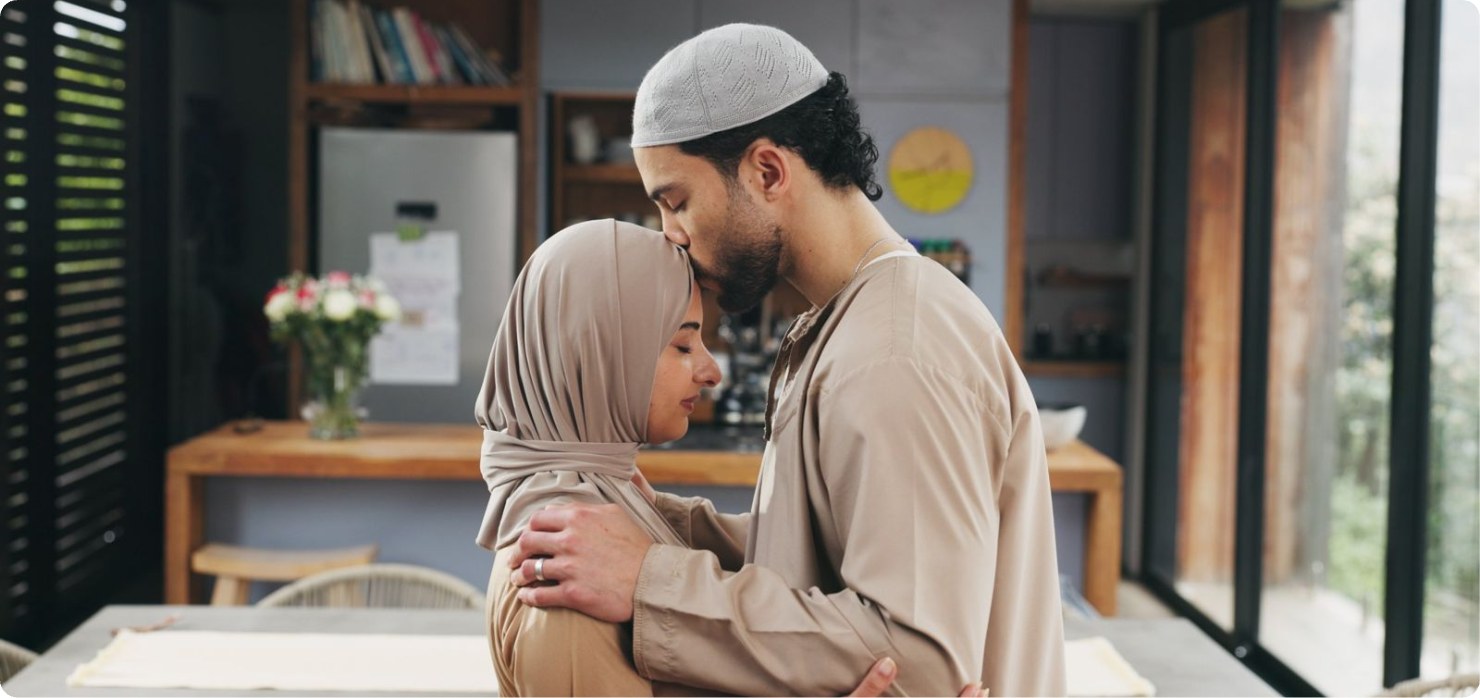
Your spouse will shape your faith, your home and the way your children grow up. The Prophet ﷺ said the best enjoyment of this world is a righteous spouse (Sahih Muslim 1467). Taking time to choose carefully is itself an act of worship.
What Islam Says to Look For in a Spouse
Two hadiths form the foundation of choosing a spouse in Islam: one addressed mainly to men, and one to the families of women.
1. Religion comes first
تُنْكَحُ الْمَرْأَةُ لأَرْبَعٍ لِمَالِهَا وَلِحَسَبِهَا وَجَمَالِهَا وَلِدِينِهَا، فَاظْفَرْ بِذَاتِ الدِّينِ تَرِبَتْ يَدَاكَ
Tunkahul-mar'atu li-arba': limaliha, wa lihasabiha, wa lijamaliha, wa lidiniha. Fazfar bidhatid-dini taribat yadak.
A woman is married for four things: her wealth, her family status, her beauty and her religion. Choose the one with religion, and you will prosper.
The hadith does not say wealth, family or beauty are forbidden to consider. It says they are not the deciding factor. When deen is present, the other qualities become a blessing; when it is missing, they rarely keep a marriage together.
2. Religion and character together
إِذَا خَطَبَ إِلَيْكُمْ مَنْ تَرْضَوْنَ دِينَهُ وَخُلُقَهُ فَزَوِّجُوهُ إِلاَّ تَفْعَلُوا تَكُنْ فِتْنَةٌ فِي الأَرْضِ وَفَسَادٌ عَرِيضٌ
Idha khataba ilaikum man tardawna dinahu wa khuluqahu fazawwijuh. Illa taf'alu takun fitnatun fil-ardi wa fasadun 'arid.
When someone whose religion and character you are pleased with comes to you with a proposal, marry (your daughter) to him. If you do not, there will be trial in the land and widespread corruption.
Notice the pairing: deen and khuluq. Someone can pray five times a day and still be harsh, dishonest or lazy at home. Look for both.
What "good deen" looks like in practice
| Quality | What to look for |
|---|---|
| Prayer | Prays the five daily prayers, even when no one is watching |
| Honesty | Tells the truth about money, past and plans |
| Treatment of family | Respects and serves their own parents and siblings |
| Temper | Stays calm when things go wrong; apologises when at fault |
| Halal income | Earns and spends in permissible ways |
| Growth | Still learning about Islam and wants to keep improving |
| Modesty | Lowers the gaze and keeps boundaries during the process itself |
The Prophet ﷺ said the best of you are those who are best to their families (Jami' at-Tirmidhi 3895). How a person treats their own family today is the best preview of how they will treat you.
How to Choose a Spouse in Islam: 10 Steps
Make your intention sincere
Marry to please Allah, protect your chastity and build a home on faith. The Prophet ﷺ encouraged young people who are able to marry to do so, because it helps them lower the gaze and guard their modesty (Sahih al-Bukhari 5066). An intention for Allah turns the whole search, with its waiting and its disappointments, into reward.
Prepare yourself first
Before asking "who is right for me?", ask "am I ready to be a good spouse?" Check that you can:
- Fulfil the basic rights of a spouse (for a man, financial support and housing; for both, kindness and respect)
- Pray regularly and know the basics of halal and haram in marriage
- Manage your temper, your time and your money
Allah says good women are for good men, and good men for good women (Surah An-Nur 24:26, read on NurAva). Working on yourself is the surest way to attract the right person.
Write down your non-negotiables
Split your wishes into two lists. Must-haves are things you cannot compromise on, such as prayer, honesty, and wanting children. Nice-to-haves are things you would like but can live without, such as a certain height, profession or city. Keep the must-have list short; most failed searches come from treating nice-to-haves as must-haves.
Search through halal channels
Good places to look are family and trusted friends, your local masjid or imam, Islamic community events, and reputable Muslim matrimonial services that involve families. Women may also propose: Khadijah (may Allah be pleased with her) proposed to the Prophet ﷺ through an intermediary.
Involve your family or wali
Family brings experience and protection. For a woman, her wali (usually her father) plays a central role. The majority of scholars hold that a nikah is not valid without a wali (Sunan Abi Dawud 2085). In the Hanafi school, an adult woman's nikah is valid without one, but going ahead without her family is strongly discouraged. Either way, involve them early.
Meet in a halal way
Meet with a mahram or family member present, in a public or family setting. Avoid private meetings alone (khalwah) and long, unsupervised chatting. Islam allows a man to look at the woman he intends to marry; the Prophet ﷺ advised a companion to do so because it is more likely to create lasting affection between them (Jami' at-Tirmidhi 1087).
Ask the important questions
Use your meetings to discuss faith, family, money, children and future plans honestly. The section below lists the topics that matter most. Shyness is natural, but avoiding difficult topics now leads to painful surprises later.
Do your research
Ask people who know the person well: an imam, teachers, colleagues, friends of the family. Ask specific questions such as "How do they behave when angry?" or "Are they regular in prayer?" Telling the truth about someone's real faults in this situation is not backbiting; it is sincere advice.
Pray Salat al-Istikhara
Istikhara is a two-rak'ah prayer asking Allah to guide you to what is best. After praying two voluntary rak'ahs, recite this dua, taught by the Prophet ﷺ :
اللَّهُمَّ إِنِّي أَسْتَخِيرُكَ بِعِلْمِكَ وَأَسْتَقْدِرُكَ بِقُدْرَتِكَ، وَأَسْأَلُكَ مِنْ فَضْلِكَ الْعَظِيمِ، فَإِنَّكَ تَقْدِرُ وَلاَ أَقْدِرُ وَتَعْلَمُ وَلاَ أَعْلَمُ وَأَنْتَ عَلاَّمُ الْغُيُوبِ، اللَّهُمَّ إِنْ كُنْتَ تَعْلَمُ أَنَّ هَذَا الأَمْرَ خَيْرٌ لِي فِي دِينِي وَمَعَاشِي وَعَاقِبَةِ أَمْرِي ـ أَوْ قَالَ عَاجِلِ أَمْرِي وَآجِلِهِ ـ فَاقْدُرْهُ لِي وَيَسِّرْهُ لِي ثُمَّ بَارِكْ لِي فِيهِ، وَإِنْ كُنْتَ تَعْلَمُ أَنَّ هَذَا الأَمْرَ شَرٌّ لِي فِي دِينِي وَمَعَاشِي وَعَاقِبَةِ أَمْرِي ـ أَوْ قَالَ فِي عَاجِلِ أَمْرِي وَآجِلِهِ ـ فَاصْرِفْهُ عَنِّي وَاصْرِفْنِي عَنْهُ، وَاقْدُرْ لِي الْخَيْرَ حَيْثُ كَانَ ثُمَّ أَرْضِنِي بِهِ
Allahumma inni astakhiruka bi'ilmika, wa astaqdiruka biqudratika, wa as'aluka min fadlikal-'azim. Fa innaka taqdiru wa la aqdir, wa ta'lamu wa la a'lam, wa anta 'allamul-ghuyub. Allahumma in kunta ta'lamu anna hadhal-amra khairun li fi dini wa ma'ashi wa 'aqibati amri, faqdurhu li wa yassirhu li thumma barik li fih. Wa in kunta ta'lamu anna hadhal-amra sharrun li fi dini wa ma'ashi wa 'aqibati amri, fasrifhu 'anni wasrifni 'anhu, waqdur liyal-khaira haithu kana thumma ardini bih.
O Allah, I ask You to guide me by Your knowledge, and I ask You for ability by Your power, and I ask You from Your immense bounty. You are able and I am not; You know and I do not; You are the Knower of the unseen. O Allah, if You know this matter is good for me in my religion, my life and my final outcome, then decree it for me, make it easy for me and bless it for me. And if You know this matter is bad for me in my religion, my life and my final outcome, then turn it away from me and turn me away from it, decree good for me wherever it may be, and make me content with it.
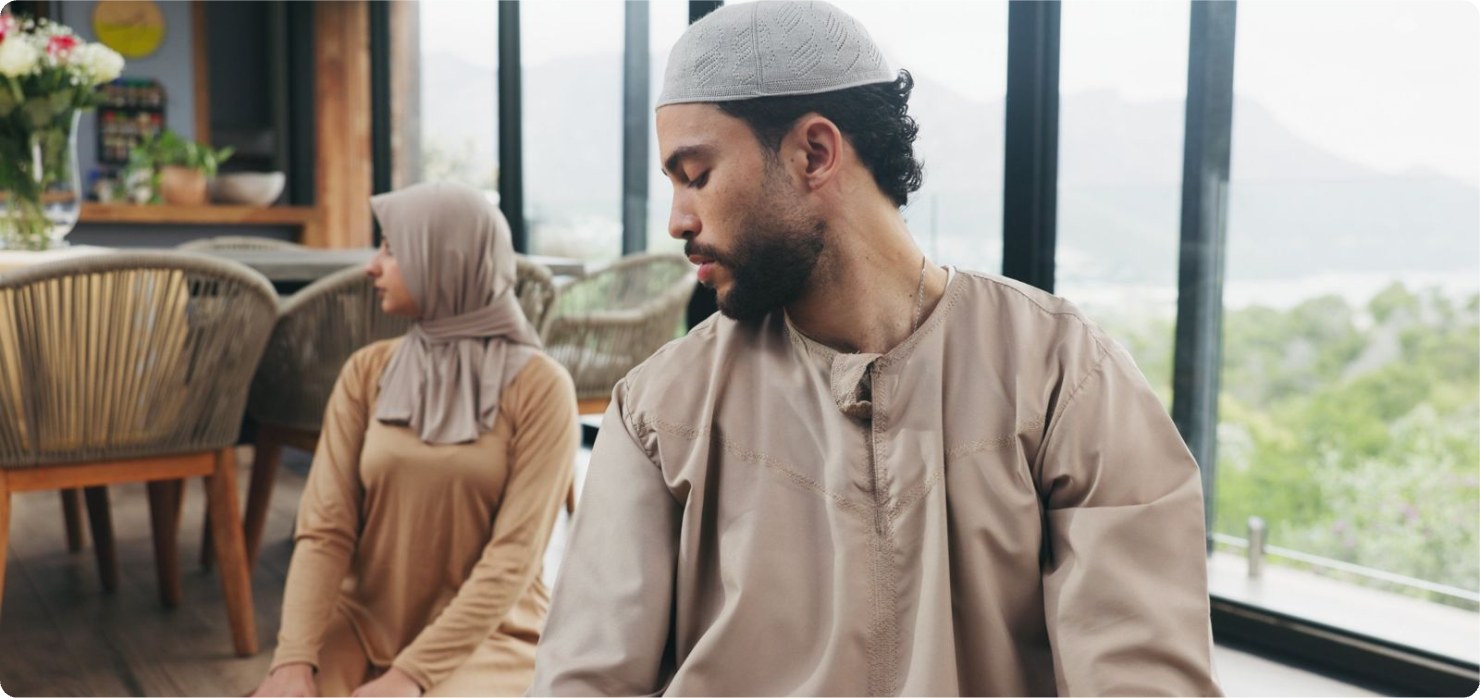
When you say "this matter" (hadhal-amr), think of the specific proposal. Istikhara does not require a dream or a special feeling. Watch how things unfold: if the matter becomes easy, that is a sign; if obstacles keep appearing, that is also an answer.
Consult, decide and give clear consent
Talk the decision through with people you trust (istisharah), then decide. Consent is a condition of marriage: a previously married woman must agree in words, and a woman who has not married before must give her permission (Sahih al-Bukhari 5136). No one, including parents, may force a marriage.
Compatibility (Kafa'ah): Beyond Deen
Once deen and character are in place, compatibility decides how smooth daily life will be. Scholars call this kafa'ah, meaning suitability between the two spouses. In the Hanafi school, kafa'ah is considered mainly from the man's side, to protect the woman and her family from an unsuitable match.
| Area | Why it matters | Questions to think about |
|---|---|---|
| Religious practice | Different levels of practice cause daily friction | Do we pray, dress and observe halal in a similar way? |
| Values and goals | Shapes every big decision | Do we agree on what a good life looks like? |
| Education and outlook | Affects conversation and decision- making | Can we understand and respect each other's thinking? |
| Lifestyle | Daily routines, social life, spending habits | Are our habits close enough to live together peacefully? |
| Family culture | In-laws are part of married life | Can both families respect each other? |
| Location | Where you will live and work | Is either of us expected to move, and are we both willing? |
| Children | Number, timing and upbringing | Do we agree on raising children with Islamic values? |
Topics to Discuss Before You Say Yes
These conversations can feel awkward, but they protect both of you. Cover each topic before deciding, ideally with a family member present.
| Topic | What to talk about |
|---|---|
| Faith | How they practise now, and how they want to grow in deen |
| Roles | Expectations around work, housework and decision-making |
| Money | Income, debts, saving, and the mahr (Surah An-Nisa 4:4, read on NurAva) |
| Living arrangements | Living independently or with family, and which city or country |
| Children | When to have them, how many, and how to raise them |
| Education and career | Whether either spouse plans further study or a career change |
| Extended family | How involved parents and in-laws will be |
| Health | Any serious health matters the other person has a right to know |
| Past | Previous marriages, children, or anything that affects the marriage |
| Conflict | How each of you handles anger and disagreement |
Listen as much as you speak. How someone answers, calmly and honestly or defensively, tells you as much as the answer itself.
Red Flags to Watch For
Some warning signs should make you pause, ask more questions, or walk away.
| Red flag | Why it is serious |
|---|---|
| Neglects the obligatory prayers | Shows how they treat their duties to Allah, and later to you |
| Lies or hides important facts | A marriage cannot rest on dishonesty |
| Uncontrolled anger or disrespect | Harshness in the process usually grows after the nikah |
| Pushes for private meetings or crossing limits | Shows little respect for Allah's boundaries or yours |
| Mistreats or cuts off their own parents | A strong predictor of how they will treat a spouse |
| Refuses to involve families | Secrecy is rarely a sign of good intentions |
| Pressures you to decide quickly | A good match can wait for Istikhara and consultation |
| Controls money or your contact with others | Early signs of a controlling relationship |
| Earns from clearly haram sources | Affects the barakah of the whole home |
If you notice a red flag, do not ignore it in the hope that marriage will change them. Discuss it openly, involve your family, and seek advice from a scholar.
Advice for Brothers, Sisters and Parents
For brothers
- Be ready to provide. In Islam the husband is responsible for his wife's food, clothing and housing. You do not need to be wealthy, but you need a plan.
- Approach the family, not just the woman. Speaking to her wali first shows respect and seriousness.
- Do not judge by looks alone. Beauty fades and changes; a righteous wife's character grows sweeter with time.
- Be honest about your situation. Share your income, living plans and responsibilities openly.
For sisters
Your consent is your right. No one may marry you without your agreement.
Ask to speak with him properly. You are entitled to meet him (with family present) and ask questions before deciding.
Look at how he treats others. His behaviour with his mother, sisters, and people who can do nothing for him matters more than his words to you.
Set your mahr thoughtfully. It is your right, given by him to you; agree on it clearly with your family's help.
For parents
Support your children rather than deciding for them. Put deen and character first, avoid rejecting good proposals over status or minor cultural differences, and never pressure a son or daughter into a marriage they do not want.
7 Common Mistakes When Choosing a Spouse
- Putting status or looks above deen. It goes against the clear advice of the Prophet ﷺ and is the most common cause of regret.
- Rejecting good proposals over small things. Height, job title or a minor cultural difference rarely matter after the wedding.
- Rushing to decide. Skipping research, Istikhara and consultation to "secure" someone.
- Waiting for a perfect person. No one is flawless; look for someone whose flaws you can live with and who is working on them.
- Hiding the truth. Concealing health issues, debts or past marriages damages trust from day one.
- Keeping the search secret from family. Secret relationships often lead to haram and remove the protection families provide.
- Expecting marriage to change someone. Marry the person as they are now, not as you hope they will become.
From Proposal to Nikah: A Typical Timeline
There is no fixed timeline in Islam, but most families move through these stages over a few weeks to a few months. Take the time you need; do not drag it out without reason.
| Stage | What happens | Typical length |
|---|---|---|
| 1. Introduction | Families or a trusted intermediary share basic details | 1 to 2 weeks |
| 2. First meeting | Supervised meeting; both look at and speak with each other | One meeting |
| 3. Getting to know each other | Further family meetings and discussion of key topics | 2 to 6 weeks |
| 4. Research | Asking people who know the person well | Alongside stage 3 |
| 5. Istikhara and consultation | Prayer, reflection and advice from trusted people | 1 to 2 weeks |
| 6. Agreement | Both give consent; families agree on mahr and nikah date | 1 to 2 weeks |
| 7. Nikah | Offer and acceptance before two witnesses, with mahr | One day |
Preparing for marriage? Learn it from qualified scholars.
NurAva Islamic University teaches marriage the way Islam presents it: live, one-on-one or in small groups, with scholars you can ask anything.
- Marriage in Islam
A structured program on the fiqh and spirit of marriage: choosing a spouse, the nikah, mahr, and the rights and responsibilities of husband and wife. - Islamic Marriage Masterclass
A focused 2-hour live session with a full course companion book, for anyone preparing for marriage or already married: communication, finances, in-laws and resolving conflict.
Keep Learning on NurAva
- NurAva Journal: all articles
- How to Choose the Right Online Quran Teacher
- What is Tajweed and Why It Matters
- Read the Qur'an on NurAva
- Online Quran classes
- Meet our teachers
Sources
- Quran: Surah Ar-Rum 30:21 (nurava.org/quran/surah-ar-rum), Surah An-Nur 24:26 (nurava.org/quran/surah-an-nur), Surah An-Nisa 4:4 (nurava.org/quran/surah-an-nisa)
- Sahih al-Bukhari 5090: a woman is married for four things
- Jami' at-Tirmidhi 1084: marry the one whose religion and character please you
- Sahih Muslim 1467: the best enjoyment of this world is a righteous spouse
- Jami' at-Tirmidhi 3895: the best of you are best to their families
- Sahih al-Bukhari 5066: encouragement for young people to marry
- Sunan Abi Dawud 2085: marriage and the wali
- Jami' at-Tirmidhi 1087: looking at the person you intend to marry
- Sahih al-Bukhari 1162: Salat al-Istikhara
- Sahih al-Bukhari 5136: consent in marriage
This article is general guidance based on the Quran and Sunnah, following the Hanafi school where scholars differ. For a ruling on your own situation, consult a qualified scholar. Questions? Email verify@nurava.org or visit nurava.org/contact.