Why Is Islamic History Important for Muslims Today?
NURAVA JOURNAL · ISLAMIC HISTORY
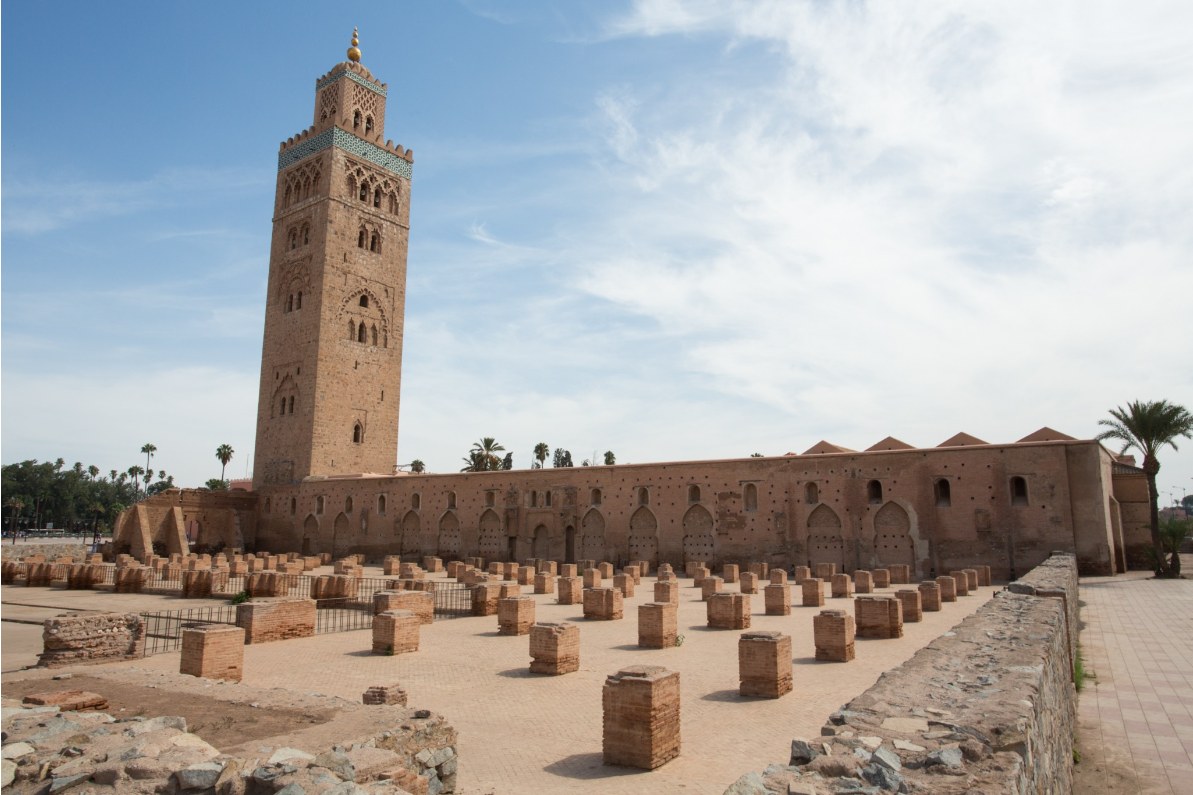
Historic Koutoubia Mosque complex, Marrakech, Morocco. Contemporary photograph of Islamic architectural heritage.
Muslims Today?
A practical guide to the Prophets, the Rightly Guided Caliphs, Muslim civilizations, knowledge and lessons for modern life.
NurAva Islamic University · October 2026
The past is not simply a collection of dates. Studied carefully, Islamic history helps us understand faith, responsibility, human achievement and the consequences of decisions.
Why Study Islamic History? The Short Answer
Islamic history matters because it connects Muslims with the experiences of earlier believers, teaches ethical lessons, explains the development of Muslim societies, and reveals how people pursued knowledge, justice and community life in different times and places. It is also a way to ask hard questions about mistakes, disagreements and change, rather than treating the past as flawless.
“In their stories there is truly a lesson for people of reason.”
Surah Yusuf 12:111, translation of the meaning
This Qur’anic principle invites reflection. The histories of the Prophets contain guidance about patience, trust in Allah and integrity. The later history of Muslim communities adds a human record of leadership, learning, creativity and conflict. Both deserve thoughtful study, while recognizing that revelation and historical scholarship are not the same kind of source.
Five reasons history still matters
| What we gain | Why it matters today |
|---|---|
| A rooted identity | Understand where beliefs, institutions and traditions emerged. |
| Character lessons | Reflect on courage, patience, honesty, mercy and accountability. |
| Civic understanding | Study governance, justice, public service and disagreement. |
| Respect for learning | See how scholars developed and shared knowledge across cultures. |
| Better judgment | Learn from both achievements and failures without oversimplifying. |
This guide follows six subjects in NurAva’s Study of Islamic History program, then offers practical ways for learners and families to engage with the past.
1. What Do the Stories of the Prophets Teach Us?
For Muslims, the stories of the Prophets are a key starting point. The Qur’an presents episodes from their lives as reminders of faith, moral responsibility and Allah’s guidance. When reading these accounts, the aim is not to imagine details that the sources do not provide. It is to understand the lessons the texts actually teach.
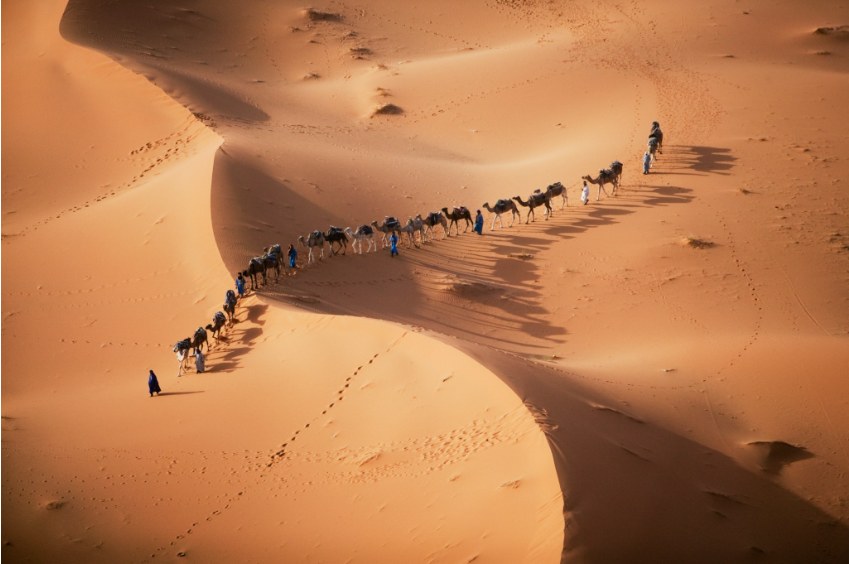
Desert caravan photograph used as an illustration of travel in arid landscapes, not a depiction of any Prophet or historical
event.
| Theme | Question for a learner |
|---|---|
| Patience | What helps a person remain steadfast during difficulty? |
| Truthfulness | How should someone speak truth when it is unpopular? |
| Reliance on Allah | How do prayer, planning and responsible action work together? |
| Mercy | How should we treat people who disagree with us? |
A useful approach is to read a Qur’anic passage, consult a trusted tafsir and then write one lesson in your own words. Avoid dramatic, unsupported retellings. The stories of Nuh, Ibrahim, Musa, Yusuf and other Prophets each have distinct contexts and should not be reduced to a single slogan.
2. What Can We Learn from the Rightly Guided Caliphs?
Following the death of Prophet Muhammad in 632 CE, the early Muslim community faced major questions about leadership, administration and unity. In Sunni historical terminology, the first four caliphs are Abu Bakr, Umar, Uthman and Ali (may Allah be pleased with them). The Rashidun period is commonly dated 632–661 CE.
Their histories provide topics for careful study: stewardship of public resources, decision-making, consultation, community welfare and the challenge of preserving unity during disagreement. Accounts of the period must be read with attention to their sources and the diverse interpretations held across Muslim traditions.
Leadership lessons to discuss
| Focus | Modern application |
|---|---|
| Amanah (trust) | Take responsibility for duties and shared resources. |
| Shura (consultation) | Hear relevant perspectives before major decisions. |
| Adl (justice) | Act fairly even when personal interests are involved. |
| Accountability | Recognize mistakes and seek to correct them. |
3. How Did Islamic Civilizations Develop?
Islamic history extends far beyond one region or dynasty. As Muslim societies expanded and interacted with neighboring peoples, political institutions, languages, architecture, arts and intellectual traditions developed in many forms. A good history course compares periods without assuming all Muslims lived the same way.
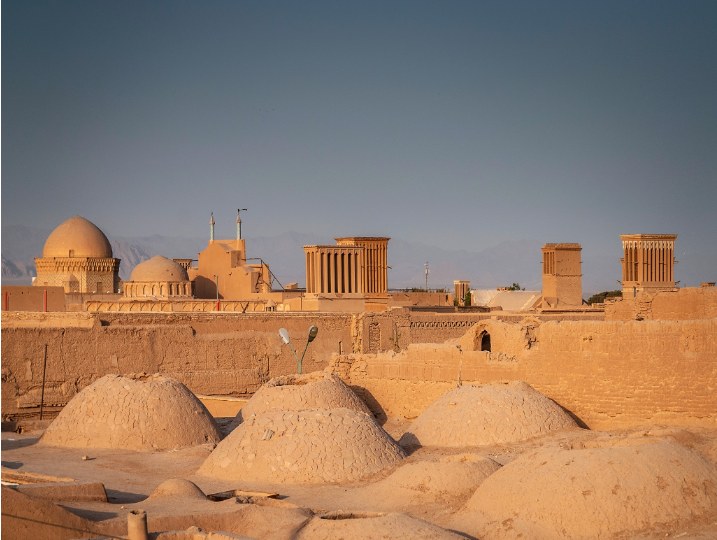
Old town rooftops in Yazd, Iran, showing historic regional architecture. This is not presented as an image of a particular
caliphate.
A simplified historical timeline
| Period | Approximate dates | Historical focus |
|---|---|---|
| Rashidun Caliphate | 632–661 CE | Early communal leadership and expansion. |
| Umayyad Caliphate | 661–750 CE | Rule centered in Damascus; wider imperial administration. |
| Abbasid Caliphate in Baghdad | 750–1258 CE | Major center of scholarship and cultural exchange; power changed over time. |
| Ottoman Empire | c. 1299–1922 CE | Long-lived empire spanning Anatolia, southeastern Europe and other regions. |
These dates summarize major political periods; they are not a complete timeline of Muslim history. Dynasties overlapped, and Muslim life also flourished outside their borders. For example, Muslim communities existed in Africa, Central Asia, South Asia and Southeast Asia under many different political arrangements.
4. What Made the Umayyad and Abbasid Periods Important?
The Umayyad and Abbasid eras help students understand how political organization affected daily life, education and culture. The Umayyads governed an extensive empire from Damascus. The Abbasid dynasty later made Baghdad a major political and intellectual center, although its direct political control was not constant throughout its long history.
Students should study both achievements and challenges: systems of administration, changing relationships among communities, trade, literary culture and political conflict. These histories become more useful when we ask what people experienced in their own time, rather than judging entire centuries through a single label.
5. What Can Islamic Architecture Tell Us About History?
Buildings reveal how communities invested in worship, public space, craft and learning. Mosques, libraries, courtyards and city plans can also show local influences and historical change. An architectural photograph is an invitation to ask who built a place, when, and for what purpose; it is not proof of a particular event without evidence.
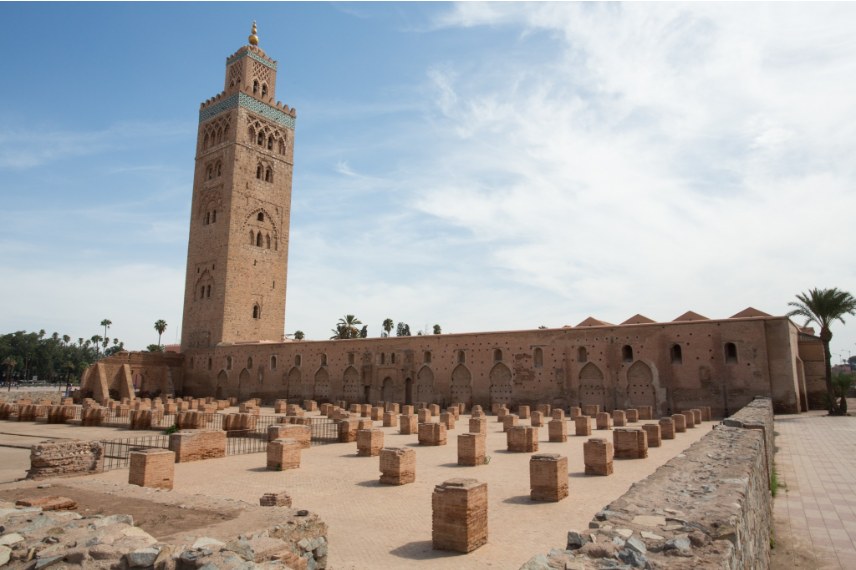
Koutoubia Mosque, Marrakech, Morocco, photographed in the present day.
For example, the Koutoubia Mosque in Marrakech is associated with the Almohad period, not the early Rashidun, Umayyad or Abbasid capitals. That distinction matters: a reliable visual history names the actual place and avoids using any “old mosque” to represent every Islamic era.
Questions to ask when viewing historical places
| Observe | Investigate |
|---|---|
| Location | Which region and cultural traditions shaped the building? |
| Period | When was it constructed, rebuilt or restored? |
| Function | Did it serve worship, study, trade or civic life? |
| Sources | Can a museum, historian or heritage record confirm the claim? |
6. Why Do Muslim Scientists Matter in World History?
Many scholars working in Muslim-majority societies contributed to mathematics, medicine, astronomy, optics, geography and other fields. Their work often drew on earlier Greek, Indian, Persian and other learning, which they studied, debated, translated and developed further. This history shows that knowledge grew through collaboration across languages and communities.
Al-Khwarizmi is associated with foundational work in algebra; Ibn al-Haytham is widely studied for contributions to optics; and Ibn Sina’s medical writings became influential across regions. These figures should be presented as historical scholars with specific works, not used to claim that any one civilization invented all modern science.
Historical lesson: intellectual achievement depends on curiosity, disciplined study, careful observation, transmission of ideas and willingness to revise an explanation when evidence demands it.
7. How Can Islamic History Help Muslims Today?
History becomes relevant when learners connect it to present questions without forcing a false parallel. A student choosing a career, a parent raising children and a teacher building a classroom community all face decisions involving knowledge, ethics and responsibility. Examples from the past can prompt reflection, but they do not replace contemporary expertise or qualified religious guidance.
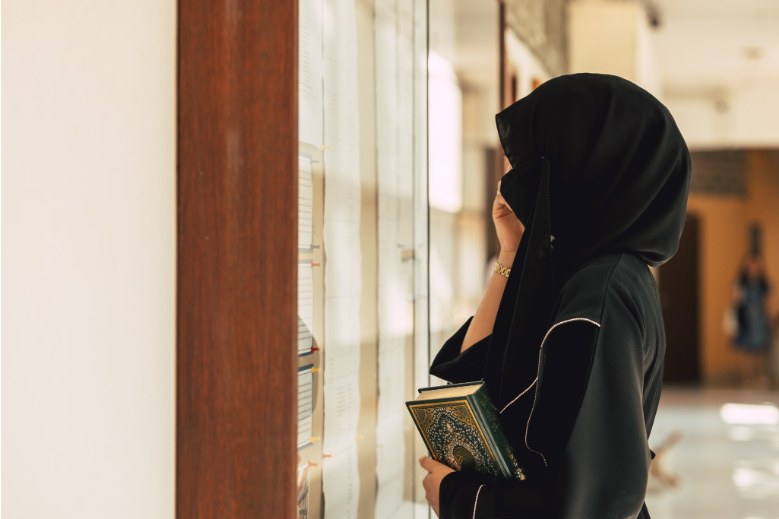
Contemporary learner examining displayed information, illustrating study and reflection.
| Today’s challenge | Helpful historical lens |
|---|---|
| Questions about identity | Study the diversity of Muslim communities and their shared religious foundations. |
| Leadership at school or work | Discuss trust, fairness, consultation and responsible decision-making. |
| Science and modern technology | Explore the historical role of research, evidence and scholarship. |
| Online misinformation | Distinguish verified historical sources from dramatic, unattributed claims. |
| Disagreement | Learn to recognize varied sources, viewpoints and historical contexts. |
8. How Should Beginners Start Learning Islamic History?
Start with a clear sequence: Qur’anic stories and the Prophetic period, the early Muslim community, major dynasties and regional civilizations, then thematic topics such as learning, architecture and science. Use maps and timelines to understand chronology, and keep a glossary of names and places.
A simple four-week starting plan
| Week | Learning focus | One practical task |
|---|---|---|
| 1 | Prophets and Qur’anic lessons | Read one passage with a reliable tafsir; write three questions. |
| 2 | Rashidun period | Create a chronological chart of the first four caliphs. |
| 3 | Umayyads and Abbasids | Compare capitals, periods and major developments. |
Week Learning focus One practical task
4 Empires and scholarship Choose one city or scholar and check two reliable sources.
Keep your notes divided into three columns: established historical information, interpretations that scholars debate, and questions needing further research. This habit helps make learning both respectful and accurate.
9. How Can Families Learn Islamic History Together?
History can become a shared learning activity. Parents and students can read a short passage together, look at a map, and discuss what they found surprising. Encourage sincere questions. If a topic involves contested events or religious rulings, use qualified teachers and credible works rather than relying on isolated video clips.

Young learners taking part in an online session, illustrating collaborative learning.
Try a weekly family discussion: What happened? What evidence supports the account? What values are worth discussing? How is the world different now? A calm conversation helps children build curiosity instead of memorizing disconnected dates.
10. Study Islamic History with NurAva
NurAva Islamic University presents a Study of Islamic History program designed to cover foundational historical subjects, from the Prophets and the Rightly Guided Caliphs to major empires and Muslim scientists. Its supplied program overview lists a duration of 9 months and a displayed fee of $25 per month; contact NurAva to confirm current details before enrollment.
Program subject What students explore
Prophets History Key stories and lessons from the prophetic tradition.
| Program subject | What students explore |
|---|---|
| Khilafat-e-Rashida | The first four caliphs and questions of early leadership. |
| Umayyad Empire | Expansion, administration and historical context. |
| Abbasid Empire | Baghdad, scholarship and historical change. |
| Ottoman Empire | Empire, institutions and long-term transformation. |
| Muslim Scientists | Important scholarly contributions and the history of learning. |
Explore the Study of Islamic History program
Visit www.nurava.org for programs, current enrollment information and the option to request a
free meeting.
Frequently Asked Questions About Islamic History
Why is Islamic history important for Muslims?
It offers religious reflection, historical perspective, examples of ethical choices and an understanding of how diverse Muslim communities developed across time.
Is Islamic history only about wars and caliphs?
No. It also includes religious scholarship, social life, art, trade, language, education, science, architecture and everyday experiences.
What is the best order for learning Islamic history?
Begin with Qur’anic stories and the Prophetic period, then study the early caliphates, later empires and major regional and intellectual traditions.
What can students learn from the Rightly Guided Caliphs?
They can explore leadership, consultation, public responsibilities and how early Muslims confronted difficult political and communal questions.
Why study the Abbasid period?
It is a major context for studying Baghdad, translation, scholarly networks and developments in mathematics, medicine, literature and other subjects.
Can children and beginners study Islamic history online?
Yes, with age-appropriate material, a coherent timeline, discussion and guidance from teachers who understand the sources and historical context.
Does studying history replace learning the Qur’an and Sunnah?
No. Historical study complements religious education. Historical claims, religious interpretations and legal rulings need to be distinguished.
Where can I learn more through NurAva?
Visit the NurAva website and ask about its Study of Islamic History program, course structure and meeting options.
Conclusion: Learn the Past, Think About the Present
Islamic history helps Muslims see how belief and human action shaped communities over centuries. Its lessons include persistence, ethical responsibility, scholarship, service and the need to examine claims carefully. The value of history lies not in romanticizing every period, but in becoming more thoughtful about the world we inherit and the choices we make.
Sources and Editorial Notes
This educational article combines Qur’anic reflection with a concise historical overview. Historical dates and summaries are broad guides; they do not cover every regional dynasty or scholarly disagreement. Before publication, NurAva should arrange review of religious interpretation and verify current program details.
Qur’anic reference: Surah Yusuf 12:111, cited in meaning as a reminder to reflect on earlier stories.
Historical references: Oxford Bibliographies in Islamic Studies, “Caliph and Caliphate”; Encyclopaedia Britannica Educational Publishing, Islamic History; and established historical periodization of the Rashidun, Umayyad, Abbasid and Ottoman eras.
Photograph note: All six images provided for this project are used as illustrative photography, not as visual records of Prophets, caliphs or specific ancient events. Photos show modern learners, present-day architectural sites, an open Qur’an, and a desert caravan.
Program information: Based on the NurAva Study of Islamic History program overview supplied for this project (9 months; $25/month; six subject areas). Confirm latest program details with NurAva.