How to Learn to Read the Quran as an Adult Beginner
· Updated
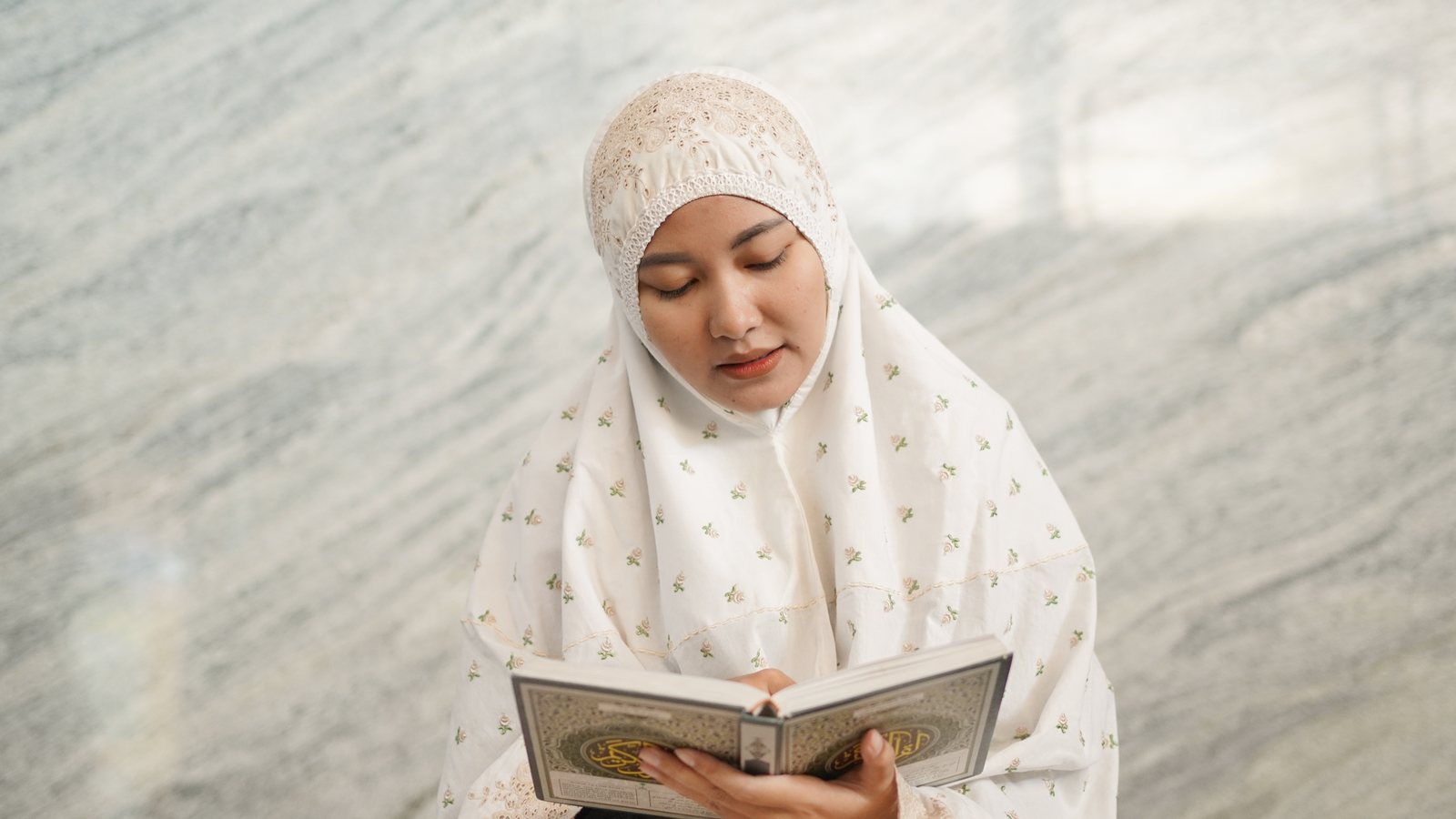
If you never learned to read the Qur'an as a child, you are not alone, and you are not too late. This guide gives you a calm, practical plan: what to learn first, how much to practise, where a teacher makes the difference, and the mistakes that slow most adult beginners down.
How to Learn to Read the Quran as an Adult Beginner: The Short Answer
Start with the Arabic letters and their sounds, then the short vowels and how letters join, using a beginner primer such as the Noorani Qaida. Practise 15 to 20 minutes most days and have a teacher correct your pronunciation live. Move on to short surahs once you can read slowly, and add Tajweed step by step. Adults who practise regularly with a teacher can often read simple verses within a few months, but the pace depends on your starting point and how much you practise.
The rest of this article explains each part, so you can start today.
Is It Too Late to Learn the Quran as an Adult?
No. Allah describes the Qur'an as made easy to learn and remember:
وَلَقَدْ يَسَّرْنَا ٱلْقُرْءَانَ لِلذِّكْرِ فَهَلْ مِن مُّدَّكِرٍۢ
Wa laqad yassarnal Qur'aana liz-zikri fahal mim-muddakir.
And We have certainly made the Qur'an easy for remembrance, so is there any who will remember?
The Prophet ﷺ also spoke about the person who finds recitation hard but keeps trying. This is the encouragement every adult beginner needs:
مَثَلُ الَّذِي يَقْرَأُ الْقُرْآنَ وَهْوَ حَافِظٌ لَهُ مَعَ السَّفَرَةِ الْكِرَامِ الْبَرَرَةِ، وَمَثَلُ الَّذِي يَقْرَأُ الْقُرْآنَ وَهْوَ يَتَعَاهَدُهُ وَهْوَ عَلَيْهِ شَدِيدٌ، فَلَهُ أَجْرَانِ
The one who recites the Qur'an and has mastered it will be with the noble, righteous scribes (the angels). And the one who recites it with difficulty, striving to learn it, will have a double reward.
Struggling with the letters in your thirties, forties or sixties is not a sign that you are behind. It is the effort the hadith talks about. What you need is a clear path and someone to guide you along it.

What You Are Actually Learning
Reading the Qur'an is not one skill. It is four, and you build them in this order:
| Skill | What it means | When it comes |
|---|---|---|
| Letters and sounds | Recognising the 28 Arabic letters and pronouncing each from the right place in the mouth (makharij) | Weeks 1 to 4 |
| Vowels and joining | Short vowels, tanween, sukoon, shaddah, and how letters change shape when joined | Weeks 3 to 8 |
| Fluent reading | Reading words and short verses without spelling each letter aloud | Months 2 to 4 |
| Tajweed | The rules of beautiful, accurate recitation | Begins early, deepens over time |
The weeks above are a rough guide, not a promise. Some learners move faster because they practise daily, and some need longer. Both are normal.
A Step-by-Step Plan for Adult Beginners
Learn the letters and their sounds
Begin with a beginner primer such as the Noorani Qaida or Noor Al Bayan. They are written for learners, and they teach the letters, their sounds and the first vowels in a sensible order. Do not rush this step. A letter pronounced correctly now saves you months of correcting a bad habit later. Our article on what Tajweed is and why it matters explains why correct sounds are the foundation of everything else.
Master the short vowels and the small signs
Learn fatha, kasra and damma, then tanween, sukoon and shaddah. These marks tell you how to say each letter, and they appear on every page of the Qur'an. Read short syllables out loud until they feel automatic.
Practise joining letters and long vowels
Arabic letters change shape depending on where they sit in a word. Read lines of joined letters slowly, and learn the long vowels (madd). By the end of this step you should be able to read a simple word without spelling it out.
Read the short surahs with audio
Move to the short surahs you already hear in prayer: Al-Fatihah, Al-Ikhlas, Al-Falaq and An-Nas. On NurAva each surah page shows the Arabic text with transliteration, English and Urdu translation, and a recitation you can play and download. Listen to a verse, read it, then listen again. This builds your ear and your reading together.
Add Tajweed gradually
Allah tells us to recite the Qur'an slowly and with care, and you do not need to know every rule before you read. Pick up the rules for noon sakinah, madd and qalqalah one at a time, with a teacher who can hear whether you are applying them. If you want a structured path, see our Learn Tajweed online program.
أَوْ زِدْ عَلَيْهِ وَرَتِّلِ ٱلْقُرْءَانَ تَرْتِيلًا
Aw zid 'alaihi wa rattilil Qur'aana tarteela.
Or add to it, and recite the Qur'an with measured recitation.
Build up to a page a day
Once reading feels steady, increase the amount slowly. Many learners aim for a few lines at first, then half a page, then a full page. Consistency matters more than volume.

A Realistic Weekly Routine
A small daily habit beats a long weekly session. A routine like this fits around work and family:
| Day | What to do | Time |
|---|---|---|
| Monday to Friday | Read your lesson aloud, then repeat yesterday's page | 15 to 20 minutes |
| Two days a week | Live lesson with your teacher | 30 to 45 minutes |
| Weekend | Listen to the surah you are learning and read along | 10 to 15 minutes |
If you only have ten minutes on a busy day, read for ten minutes. Keeping the habit alive is the goal.
Why a Live Teacher Matters More for Adults
You can learn the shapes of the letters from a book or an app. You cannot hear your own mistakes. Adults often repeat a mispronounced sound for weeks without knowing, because it sounds right to them.
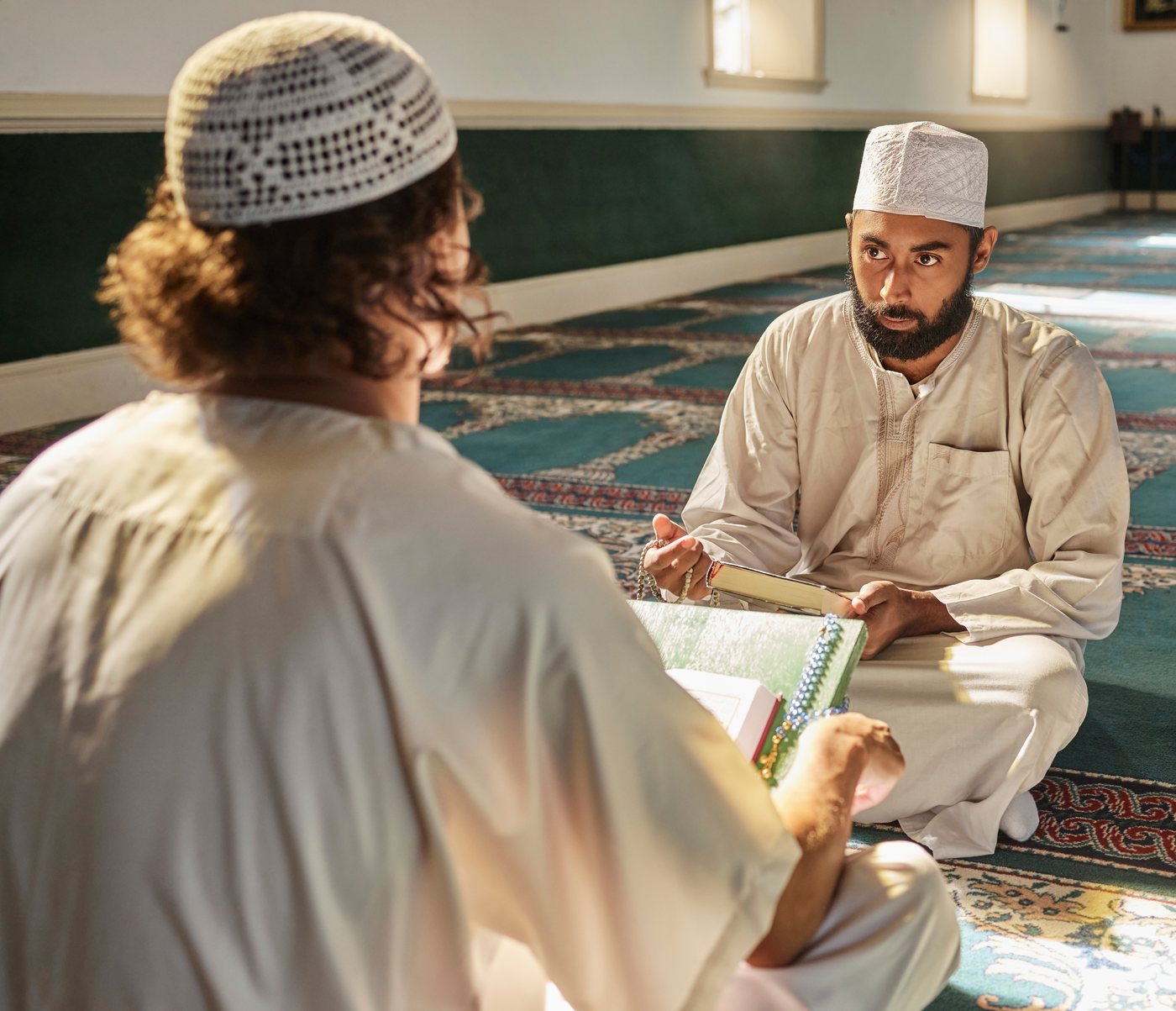
A live teacher, in person or online, listens to you read and corrects you straight away. One-on-one lessons also help adults in other ways:
- Your pace. The lesson follows you, not a class of children.
- No embarrassment. You can make mistakes in private and ask the same question twice.
- Your schedule. Online lessons fit around work, travel and time zones.
- A routine. A lesson booked with a person is harder to skip than an app reminder.
The Prophet ﷺ said:
خَيْرُكُمْ مَنْ تَعَلَّمَ الْقُرْآنَ وَعَلَّمَهُ
The best among you are those who learn the Qur'an and teach it.
Learning is itself part of that excellence. If you are deciding between teachers, our guide on how to choose the right online Quran teacher lists what to ask first.
Common Mistakes Adult Beginners Make
- Relying only on transliteration. Roman letters help in the first weeks, but they cannot show every Arabic sound. Use them as a bridge, then move to the Arabic script.
- Skipping the sounds. Rushing past makharij means you practise the wrong sound many times.
- Learning only from videos. Videos cannot hear you. Pair them with a teacher.
- Comparing yourself with children. A child absorbs sounds easily. An adult brings other strengths, such as discipline, the ability to understand a rule and the will to stick to a plan.
- Practising rarely and for long. Two hours on Sunday helps less than 15 minutes each day.
- Giving up after a bad week. Missing days happens. Start again the next day.
Transliteration: A Helpful Bridge, Not the Goal
Transliteration writes Arabic sounds in English letters. It can help you say your first surahs while you learn the script. But it cannot capture sounds like the heavy and light letters, so treat it as a temporary support. The aim is to read the Arabic text itself, and a teacher can tell you when you are ready to put the transliteration away.
Frequently Asked Questions About Learning Quran as an Adult
Can I learn to read the Quran if I do not know Arabic?
Yes. Reading the Qur'an is a skill separate from understanding Arabic. You begin with the letters and sounds, and you can add the meaning later through translation or Arabic study.
How long does it take an adult to learn to read the Quran?
It depends on how often you practise and how much support you have. Adults who practise most days with a teacher can often read simple verses within a few months. Fluent, accurate reading with Tajweed takes longer and keeps improving over the years.
Do I need to start with the Noorani Qaida?
A primer such as the Noorani Qaida is the most common starting point because it teaches the letters, vowels and joining in a clear order. A teacher can tell you whether it suits you or whether to start at a different point.
Can I learn the Quran online?
Yes. A live online lesson works well if your teacher can hear you clearly and correct your reading. Recorded videos alone do not replace a teacher who listens.
Is it normal to feel embarrassed as an adult beginner?
It is very common. Many adults feel shy about starting. A patient teacher and private one-on-one lessons make it easier, and Allah rewards the effort you make.
Ready to start reading the Qur'an with confidence?
NurAva Islamic University pairs adult learners with patient, qualified teachers for live one-on-one lessons. Start with a free demo class, with no payment and no commitment.
- Online Quran classes
Live lessons from the first letter to fluent recitation, at times that suit you. - Learn Tajweed online
Step-by-step recitation rules with a teacher who corrects you as you read.
Keep Learning on NurAva
- Online Quran classes for adults and families
- Learn Tajweed online
- How to start memorising the Qur'an
- Meet our teachers
Book a free demo class with a qualified NurAva teacher.
More from the NurAva Journal
- Why Is Islamic History Important for Muslims Today?
- How Can Muslim Youth Stay Strong in Their Faith?
- How to Choose a Spouse in Islam: A Step-by-Step Guide
- Online Quran Classes for Muslim Families in New York City
- How to Learn Quran Online in the USA: A Complete Guide for Muslim Families
- What is Tajweed and Why It Matters