How Long to Learn Tajweed? A Realistic Timeline
· Updated

Parents and adult learners ask the same question before they begin: how long will Tajweed take? There is no single number, but there is an honest range, and a few things that make it shorter or longer. This guide explains what is typical, what changes it, and how to plan.
How Long to Learn Tajweed: The Short Answer
Most learners who practise most days with a teacher can handle the basic rules, such as correct letter sounds, noon sakinah, meem sakinah and madd, within several months. Applying them smoothly while you read, without stopping to think, usually takes a year or more, and refining your recitation can continue for life. Your starting level, how often you practise and whether a teacher hears you all change the timeline.
The sections below break this down so you can set a realistic goal for yourself or your child.
What "Learning Tajweed" Actually Means
Tajweed is the set of rules for pronouncing each letter correctly and reciting the Qur'an as it was taught. People use the word for three different goals, and each takes a different amount of time:
| Goal | What it looks like | Typical time |
|---|---|---|
| Know the rules | You can name and explain the main rules | A few months of steady study |
| Apply the rules while reading | Your recitation follows the rules without stopping to think | Often a year or more |
| Refined recitation | Smooth rhythm, fine points of pronunciation, long passages | Years, and it keeps improving |
These are rough guides, not promises. Learners and teachers report different paces, and anyone who guarantees a fixed number of weeks is guessing. If you want the basics first, read our article on what Tajweed is and why it matters.
What Allah Asks of Us
The Qur'an tells us to recite with care, not with speed:
أَوْ زِدْ عَلَيْهِ وَرَتِّلِ ٱلْقُرْءَانَ تَرْتِيلًا
Aw zid 'alaihi wa rattilil Qur'aana tarteela.
Or add to it, and recite the Qur'an with measured recitation.
Measured recitation is a direction, not a deadline. You are not late if your Tajweed is still developing. The effort itself matters, as the Prophet ﷺ taught:
مَثَلُ الَّذِي يَقْرَأُ الْقُرْآنَ وَهْوَ حَافِظٌ لَهُ مَعَ السَّفَرَةِ الْكِرَامِ الْبَرَرَةِ، وَمَثَلُ الَّذِي يَقْرَأُ الْقُرْآنَ وَهْوَ يَتَعَاهَدُهُ وَهْوَ عَلَيْهِ شَدِيدٌ، فَلَهُ أَجْرَانِ
The one who recites the Qur'an and has mastered it will be with the noble, righteous scribes (the angels). And the one who recites it with difficulty, striving to learn it, will have a double reward.
What Changes How Long It Takes
Five things decide your pace more than anything else.
1. Your starting point
A learner who already reads the Arabic script fluently can begin on the rules straight away. A beginner must first learn the letters and the vowels, which is a stage before Tajweed. If that is you, start with our guide to learning to read the Qur'an as an adult beginner.
2. How often you practise
Fifteen to twenty minutes most days beats one long session a week. The mouth learns sounds through repetition, and long gaps let old habits return.
3. How often a teacher hears you
Tajweed is a spoken skill. You cannot always hear your own mistakes, so a teacher who listens and corrects you live saves a great deal of time. Two or three lessons a week usually move faster than one.
4. Age and language background
Children often absorb sounds quickly. Adults bring discipline and the ability to understand a rule. Learners whose first language has no equivalent for some Arabic sounds, such as the throat letters, may need more time on pronunciation. That is normal and fixable.
5. The quality of your teacher
A patient teacher with a clear order of lessons helps more than any app. Our guide on choosing an online Quran teacher lists what to ask before you commit.
A Realistic Tajweed Timeline
This is a general pattern for a learner who can already read the Arabic script and practises most days with a teacher. Treat it as a map, not a contract.
Makharij and letter sounds
You learn where each letter comes from in the mouth and throat, and the difference between heavy and light letters. This is the foundation, so it deserves unhurried time. Many learners spend the first weeks to a couple of months here.
Noon sakinah, tanween and meem sakinah
These rules cover how a silent noon, tanween or meem is pronounced when different letters follow. They appear in almost every page, so you meet them constantly.
Madd, the rules of prolongation
You learn which vowels are stretched and for how long. Judging the length comes with practice and a teacher's ear.
Qalqalah, ghunnah and stopping rules
You add the echoing letters, the nasal sound, and how to stop and start correctly at the end of a verse.
Practise on real surahs
Rules only become habit when you apply them. Read the short surahs aloud with a teacher, then move to longer passages.

After that comes the longest stage: making the rules automatic so that you recite smoothly and correctly without pausing to think. Do not be discouraged if this takes much longer than learning the rules.
How to Learn Faster Without Rushing
- Master the sounds first. A letter said correctly now saves months of correcting a habit later.
- Learn one rule at a time. Practise it in several verses before starting the next.
- Record yourself. Listening back to a short recording shows what you cannot hear while reciting. Share it with your teacher.
- Listen to a trusted reciter. Follow along with the text, then repeat the verse yourself.
- Revise old rules. Return to earlier rules each week so they stay in place.
- Keep it daily. Ten honest minutes on a busy day keeps the habit alive.
You can also see how the Qur'an itself speaks of ease in recitation:
فَٱقْرَءُوا۟ مَا تَيَسَّرَ مِنْهُ
Faqra'u ma tayassara minhu.
So recite what is easy from it.
Scholars explain this verse mainly as ease in how much you recite. It reminds us to start with what we can do and build from there. It is not a reason to skip learning the rules.
For Parents: What to Expect With Children
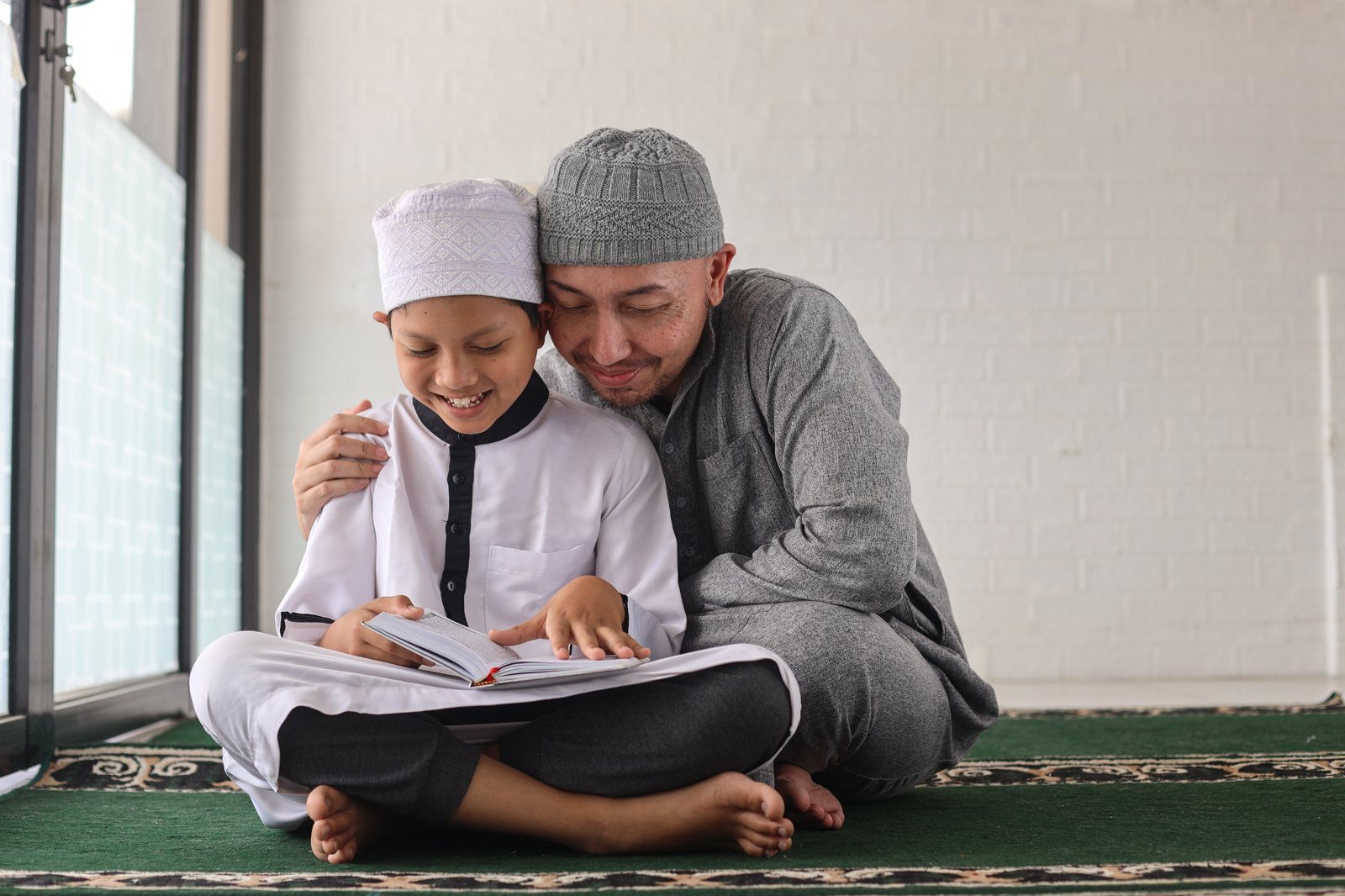
Children usually learn Tajweed alongside reading, in short lessons that repeat often. They may pick up sounds quickly, but they also need patience, gentle correction and a lesson that feels warm rather than pressured. Expect progress in small steps. A child who enjoys the lesson will keep going, and keeping going matters more than speed. If you are choosing a class for your child, see our Quran classes for kids.
Signs You Are Making Progress
You do not need a calendar to know you are improving. Look for these signs:
- Your teacher corrects the same mistake less often.
- You notice a rule in a verse before the teacher points it out.
- You can hear a mistake when you listen to a recording of yourself.
- Reading a familiar surah feels smoother than it did a month ago.
Frequently Asked Questions About Learning Tajweed
Can I learn Tajweed in one month?
You can learn the idea of some rules in a month, but applying them reliably usually takes longer. Be careful with any course that promises mastery in a fixed number of days. Your pace depends on your practice and your teacher.
Can I learn Tajweed by myself?
You can study the rules from a book or video, but you cannot easily hear your own mistakes. Most learners progress better with a teacher who listens to them recite, at least for the sounds and the harder rules.
Do I need to know Arabic to learn Tajweed?
No. You need to be able to read the Arabic script, but you do not need to understand the language. Tajweed is about pronunciation, and understanding the meaning is a separate path.
Is Tajweed obligatory?
Scholars discuss this in detail and express the levels of obligation in different ways. For a ruling that applies to your situation, please ask a qualified scholar. What is clear is that we are encouraged to recite as well as we can and to keep improving.
How long does it take a child to learn Tajweed?
It varies with age, how well the child already reads and how often they have lessons. Many children learn the basics gradually over a year or more of regular lessons, with the rules deepening as they grow.
Can I learn Tajweed online?
Yes, if your teacher can hear you clearly and correct you in a live lesson. Recorded videos alone do not replace a teacher who listens.
Ready to start Tajweed with a teacher who listens?
NurAva Islamic University offers live one-on-one lessons for children and adults. Book a free demo class to meet a teacher, share your level and get a plan that fits you. There is no payment and no commitment.
- Learn Tajweed online
Step-by-step recitation rules with a teacher who corrects you as you read. - Meet our teachers
Qualified male and female teachers for students of every age.
Keep Learning on NurAva
Book a free demo class with a qualified NurAva teacher.